发布时间:2026-10-16
From August 2 to 15, 2026, a study visit to the UK organized by the College of Management and Economics (CoME) of Tianjin University (TJU) was launched again. More than 20 TJU students traveled to the University of Reading to participate in the Digital Talent Future Leadership Program. Drawing on the teaching resources of Henley Business School and its Digital Talent Academy, students connected new knowledge in the digital era with real-world business scenarios through classroom learning, business practicum, field visits and cross-cultural exchange, broadening their international horizons and enhancing their professional capabilities.
Deepening Classroom Learning: From Digital Frontiers to Global Thinking
On August 3, the opening ceremony was held at Henley Business School, University of Reading. The event was attended by Yinshan Tang, Vice Dean of Henley Business School; Ashley Burke, Head of the International Partnerships Office at the University of Reading; Kecheng Liu, Dean of the Digital Talent Academy; Jin Jin, its Executive Dean, along with TJU team leaders Guo Junpeng, Li Lin and Cao Yue, kicking off more than ten days of study and exchange.

Ashley Burke gave a speech at the opening ceremony

Opening ceremony group photo
The program went beyond traditional lectures, combining cutting-edge knowledge, interactive discussion and hands-on practice, and covering topics such as digital transformation, generative AI, large language models and international business. Henley faculty linked tech trends with corporate cases, showing how digital technology reshapes business operations, user experience and business models; In the generative AI sessions, students further explored the logic behind AI technologies, digital service design and practical application pathways.
The teaching stressed interaction and critical thinking through discussion and debate, encouraging students to express their views and analyze real business opportunities and challenges. UK teaching, assessment and academic norms helped them compare systems and understand British-style learning and research.
Promoting Innovation through Learning: Bringing Business Models Out of Textbooks
If classroom learning completed knowledge input, then the business model practicum pushed students to turn knowledge into the ability to solve real-world problems. The program required teams to step outside the classroom and engage with local life in Reading. Starting from livelihood and service pain points that had not yet been fully addressed, they independently researched needs, designed solutions and built business models, ultimately producing a convenience-oriented app and a complete business model, and delivering group presentations in English.
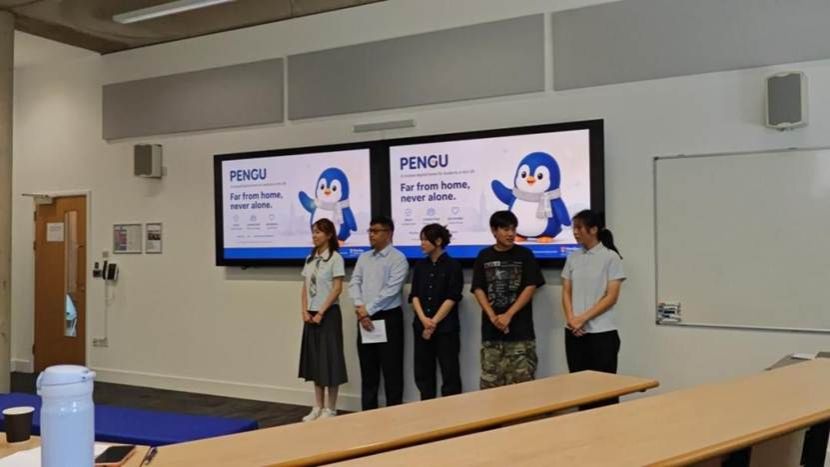
Business Model Workshop: Group presenting results entirely in English

Business Model Workshop: On-site Teacher Feedback and Discussions
Students came to see that business innovation is not about applying templates, but about starting from real user needs and balancing social value, user experience and commercial sustainability. Teams adjusted product features, user profiles, market positioning and operations based on research, while CoME and Henley faculty offered professional, local-market and international perspectives to help iterate plans.
From problem identification and market research to product design, business model construction and final presentation, the program sharpened students' abilities in market analysis, product innovation, teamwork and cross-cultural communication, putting into practice the principle of "demand-driven innovation and practice-tested solutions."
A Walking Classroom: Extending Learning Across Universities, Culture and Industry
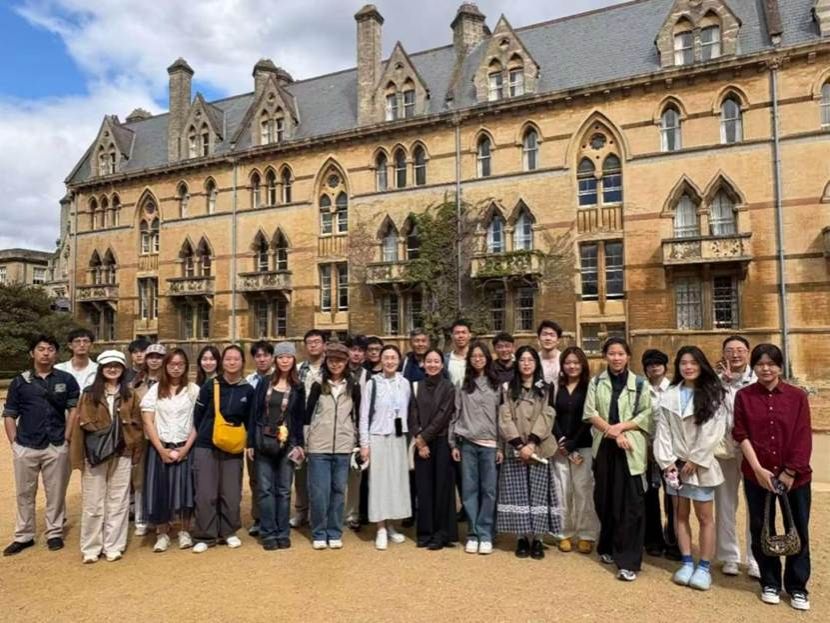
The visiting team at the University of Oxford

The visiting team at the University of Cambridge
Beyond the classroom, the program extended learning to UK universities, public cultural spaces and tech enterprises. From August 6 to 12, the team visited the University of Oxford, the University of Cambridge, the British Museum and Alibaba Cloud European Headquarters, observing the connections between knowledge, culture and industry practice in different settings.
At Oxford and Cambridge, campus visits gave students direct experience of the collegiate tradition, academic community and open atmosphere. The coexistence of heritage and innovation prompted deeper reflection: lasting academic influence comes both from exploring knowledge boundaries and upholding scholarly spirit and norms.

The visiting team at the British Museum
Alibaba Cloud European Headquarters On-site Introduction and Interactive Session
At the British Museum, objects and exhibitions from different periods and regions showed the importance of respecting facts and context in diverse narratives. The visit broadened students’ cultural horizons and reminded them to understand history and society in a more prudent and multi-faceted way.
At Alibaba Cloud European Headquarters, the team explored industrial applications of digital technology. Relevant executives introduced its European layout and AI advances, including the Qwen model, video model and coding platform. Students asked questions and gained clearer insight into how innovation integrates with enterprise development, international operations and real-world scenarios.
Mutual Exchange and Learning: From Study Visit Gains to Inter-University Cooperation
While students were immersed in classroom and practical settings, the visit also extended to inter-university exchanges. Jia Ning, Vice Dean of CoME, and Shi Liangxing, Vice Dean of the Hainan International College, visited the students in the UK during their trip to the University of Reading and attended the closing ceremony.
Robert Van de Noort, Vice-Chancellor of the University of Reading, and James Walker, Vice Dean of Henley Business School, met with the delegation. The two sides held in-depth discussions on cooperation in student exchange, faculty exchange, and the building of industry networks, laying a platform for further deepening international talent cultivation and cooperation.
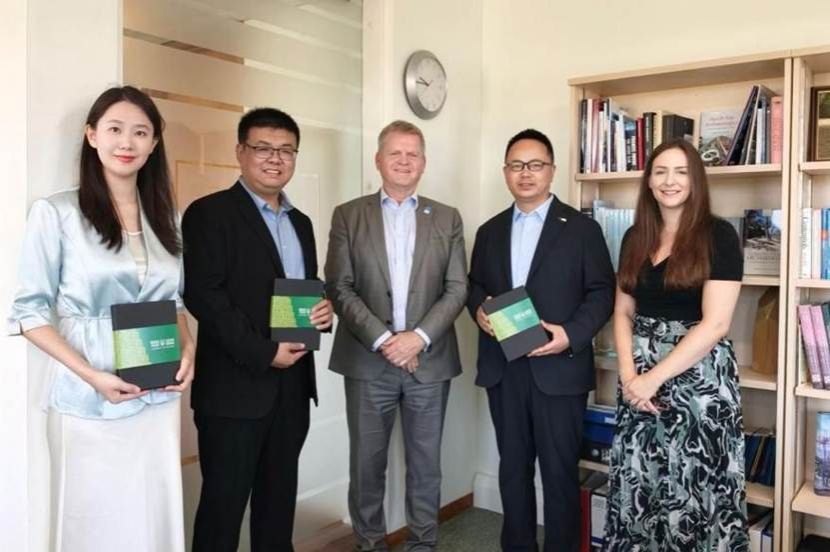
Group photo with Professor Robert Van de Noort, Vice-Chancellor of the University of Reading
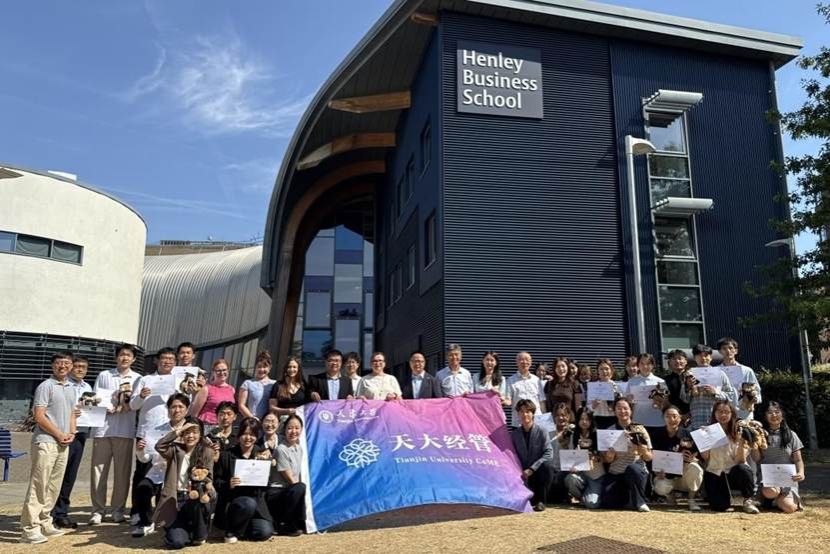
Closing ceremony group photo
On August 14, the program's closing ceremony was held. Elena B. Spasova, Dean of Henley Business School presented the students with certificates of completion and congratulated them on successfully completing the program and achieving solid learning outcomes. Ceira Crainer, who is in charge of alumni affairs at the University of Reading, introduced and invited the students to join the Henley Business School alumni network for follow-up exchanges and cooperation. The students also shared their learning gains over the past two weeks, their personal growth, and their reflections on future research and practice.
From cutting-edge digital classrooms to hands-on business projects, from century-old universities and public cultural spaces to technology enterprises, and on to inter-university exchanges, this study visit closely connected learning, practice, and reflection. While gaining new knowledge in digital business and international management, the students also enhanced their overall capabilities in teamwork, English-language expression, and cross-cultural communication.
Crossing mountains and seas means more than reaching a university or a city; it means rediscovering, in a new environment, the relationship between knowledge, practice, and one's own development. Carrying what they have learned, reflected on, and gained from this visit, TJU students will continue to stay grounded in their disciplines and explore proactively—broadening their horizons and honing their skills amid the waves of digital transformation and globalization, and turning their international learning experience into a source of strength for the future.
Editor: Sun Xiaofang